The Art of Inner Allowing

Allowing is an art, a practice, and a way of being. To me, it has become one of the practices that make life easier, more joyful, and peaceful. Although, like most arts, the art of Inner Allowing won’t always come easy to us, especially in the beginning. However, when we don’t practice Allowing, life can feel like an uphill, never-ending battle. As you have probably experienced for yourself, fighting life is exhausting and it is fruitless.
What do I mean by “Allowing”?
Allowing can take many forms and have different depths and applications, some of which I’ll do my best to briefly describe here. One of the forms I wish to contemplate in this reflection is Allowing as a way of living in which we accept what is, as it is, and are at peace with it.
This may initially sound like resignation, conformity, or even giving up. Our culture has taught us to fight and strive, and “accepting what is” is, in fact, countercultural. The irony is that even in Allowing, there is resistance, rejection, and even fighting.
We fight our own programming. We resist the temptation to fall back into old, useless patterns and habits. We reject all the illusions, beliefs, and lies we’ve so heavily relied on and defended in the past.
As I mentioned, at the beginning of the Allowing journey, allowing may not be easy. It is not a passive practice, yet it invites us into a journey through the mystery of Life, with a humbleness and simplicity of heart in which we can trust all things to unfold without our constant planning, our attempts to control, manipulate, or grasp, and without the never-ending struggle to have things happen our way.
Allowing is a journey and a practice. It is a pathway. And Life, in its infinite perfection and wisdom, gives us countless opportunities to choose this pathway. Allowing is different for each one of us, and once you set on this path, you will discover what Allowing is to you, and in that discovery, you will find peace, you will find joy, you will find love, and you will find your true Self.

Practices that integrate and foster the Art of Allowing
Most, if not all, true spiritual, healing, and transformational pathways integrate Allowing as an ongoing practice and even way of being. As an “avid student of the soul” and facilitator, I have been gently guided toward practices, frameworks, and perspectives that support this way of being and deepen my capacity to allow.
These are the ones that have been the most eye and heart opening for me, and that have brought much healing and with it peace and joy, and that have brought me closer to my Self:
Meditation
Meditation helps me create a quiet space for allowing. In meditation, I allow what is present to be present, and I allow myself to receive insights and guidance.
Prayer
In prayer, I allow myself to trust in God, in Life’s infinite wisdom and endless gifts, and it is in prayer that I can truly and totally surrender. I also allow myself to ask and receive.
Breathwork
The practice of breathwork and conscious breathing allows me to sit with my breath and expand my capacity to breathe—to receive and release—bringing presence and awareness, regulating my nervous system, and allowing my body’s natural intelligence to heal what needs to be healed and restore what needs to be restored.

Mindfulness
The practice of mindfulness allows me to be fully present and immersed in the moment. It also allows me to move at a natural, unhurried pace and to expand time by living more consciously.
Pausing
Taking regular pauses throughout the day allows me to savor each moment and to contemplate and reflect on what is present or needs my attention. It allows me to transition from one moment to another with ease and gratitude.

Letting Go
The practice of letting go helps deepen my willingness and ability to sit with what is and allow it to be. The technique introduced by Dr. David R. Hawkins, as described in detail in his book Letting Go: The Pathway of Surrender, has significantly influenced my capacity to surrender.
Inherited Family Trauma (IFT)
Learning about and processing inherited trauma helps shed a loving light on my past, to accept it and allow myself to forgive and understand those who have hurt me—or those in my lineage.
This practice fosters integration, and it allows me to separate what belongs to me from what belongs to others within my family system and to become free from the burdens of the past.
You can learn more about this exceptionally liberating framework in the book It Didn’t Start with You: How Inherited Family Trauma Shapes Who We Are and How to End the Cycle by Mark Wollyn, a leading expert on IFT.

Internal Family Systems (IFS)
Learning about and sitting with my parts, or smaller selves, like I like to call them, helps me look at my ego with loving eyes and to compassionately and curiously sit with my smaller selves and allow them to be seen, heard, understood, and released from their burdens. It also helps me embody the qualities of my true Self and allow them to naturally emerge and be expressed.
If you want to learn more about your parts and how to compassionately relate to them, I highly recommend the book No Bad Parts: Healing Trauma and Restoring Wholeness with the Internal Family Systems Model by Richard C. Schwartz, Founder of IFS.
As an Inner Allowing Facilitator, these practices have become an integral part of my life, studies, and work, and they are gently woven into the Inner Allowing sessions I facilitate.
Let us now contemplate some of the many ways in which Allowing can help us become a freer, happier, more loving, and peaceful version of ourselves.
Allowing our Emotions
This is the doorway into Allowing. So often, we repress or suppress our emotions. The practice of Allowing gives me permission to truly feel what is present and to let it move through me without resistance.
When we experience what we perceive as a negative emotion—which I’ve come to know as the way our soul communicates misalignment with us, the way it redirects us or points us toward what needs our attention—our first instinct is not to feel it. We (our smaller selves) do all sorts of things and resort to countless distractions and outlets in order not to feel what is already there.
These are some of the most common distractions or outlets that we often use to escape or numb our emotions.
Entertainment: our phones, TV, video games, YouTube, books, podcasts, magazines, and so on.
Social Media, even though it counts as entertainment, I think it deserves its own category because it is so prevalent and extremely effective at distracting us.
Shopping—my distraction of choice. As a recovering shopaholic, I can tell you that every time I buy something I do not need on impulse, I am trying to push away fear or anxiety, whenever I experience these emotions, the “tickle” to buy something, whatever—the need for more—is still there, the only difference now, is that I am, for the most part, aware of it, although I still slip into this unconscious, impulsive behavior on occasion, especially when I’m going through major transitions—inner or outer—whenever I catch myself on time and allow myself to feel the emotion, I can let the impulse pass.
Substances, narcotics, and alcohol.
Food.
Sugar.
Home renovations.
Fitness and wellness.
Plastic surgery or beauty enhancements.
Gambling.
Sex.
Work.
Cleaning.
Attending or enrolling in courses, seminars, or diverse practices.

Notice how none of these activities or things are inherently wrong or harmful in moderation (except perhaps for most substances, narcotics, and alcohol, depending on the context) and how they can all turn into addictive behaviors when unchecked. This is because we use them to escape or numb our emotions, and the more we suppress or run away from what we are feeling, the more pent-up energy and emotions we accumulate over time, the more we need these distractions and outlets.
Note: This is not the only cause for our addictive behaviors and cravings, but that is a topic for a different reflection.
Often, we don’t realize that these distractions may help us push away negative feelings temporarily, but in reality, they also cause us to experience more of those emotions. Feelings of guilt and shame—which are at the bottom of Dr. David R. Hawkins 'Map of Consciousness (Power vs Force) and have the lowest frequency—often follow these excessive patterns and behaviors.

It is a vicious cycle that most of us are unfortunately familiar with.
What can we do instead?
Allow what is present.
The Letting Go technique, designed by Dr. David R. Hawkins, is a simple yet powerful and effective way to allow our emotions to be present and then, of course, to let them go.
You can start practicing and applying it to your everyday life now, and it can be summarized as follows:
Notice what is present without labeling it (this part can be tricky because we are very used to labeling emotions and symptoms). What sensations accompany the emotions? (just notice them without naming them)
Do not resist what is present or push it away.
Feel what is present, but do not feed it with your thoughts (or label it). Let the thoughts go as well (easier said than done), focusing on your breath can really help with this one.
Stay in your body while you allow what is present (in this case, the emotion and the physical sensations that accompany it) to run its course and move through you.
Once it moves through you, let it go. Do not return to it through your thoughts, or you will bring it back.
Using the image of a match has been very helpful. Let’s say you feel a burst of anger; anger is the flame that the match ignited. If you do not feed it by “lighting more matches with your thoughts,” the flame will eventually die. It is the same with our emotions; they produce a sensation, often uncomfortable, in our bodies; however, if we do not feed the emotion with our thoughts, trying to reason it, defending it, or spinning it in our heads, eventually it passes.

This highly depends on how much pent-up emotion we have been holding down, but the more you practice this technique and release those stored emotions, the quicker and easier they’ll move through us.
Note: The Letting Go technique is also incredibly helpful to let go of cravings and resist harmful habits, and to let go of what no longer serves us in general. Just try it!
The habit of feeding our emotions with our thoughts and our inability to let them go became clear to me one day when I was walking upstairs with my small dog walking behind me. It was slippery, and she started sliding down. My hands were full, and I couldn’t help her. Eventually, she stopped, thankfully unharmed, at the bottom of the stairs. We were both very scared. When I picked her up, her body was tense, and her heart was pounding as hard as mine. However, once we reached the safety of our apartment, she literally shook it off and was all done with it, while I kept replaying it in my mind, feeling guilty about it for having my hands full and being unable to help her at the moment.
It took me almost an hour to recover, and, in fact, I can still feel traces of the negative emotion as I retell the story. The bottom line: nature is wise, we are meant to feel—that is how we know we are safe or in danger; on the right path or far from it—but we are not meant to hold on to anything. That is suffering, which creates pain and trauma. Trauma is not what happened to us; it is the unprocessed emotions about the event stored up in our bodies and psyche.
I say we could all learn to feel and allow what is present and then to “shake it off” and let it go—just like dogs, just like nature.
Practicing and applying the technique of Letting Go is much easier when we can access our true or higher Self. Ironically, the more we let go, the more we surrender and process our emotions, the more we allow them to be, the more we can access this gentle, loving, wise part of us.
So let us practice!

The Gifts of Inner Allowing
As we move through the gentle pathway of Allowing, we’ll discover the gifts it bears for us. Here are some of the ones I have encountered:
We allow the past to be our teacher and then, we let it go.
We allow forgiveness and understanding to heal our hearts.
We recognize and allow our greatness and embody our inherent power.
We allow our inner Teacher and Spirit team to guide us.
We allow ourselves to be fully loved and accepted, and that starts with loving and accepting ourselves unconditionally first.
We allow gratitude to expand and soften our hearts.
We allow ourselves to be content with what we have and what we are; to know that we are and have enough.
We allow ourselves to surrender what no longer serves us or what was never ours to carry to begin with.
We allow our mind’s inherent intelligence to heal our body.
We allow nature to teach and heal us, and to remind us who we are.
We allow silence to be the perfect learning ground.
We allow peace to permeate our days.
We allow joy to freely move through us.
We allow pain to help us grow and expand, and to show us its meaning and purpose.
We allow others to be who they are.
We allow ourselves to be who we are.
We allow all things to be as they are.
We allow our gifts to be expressed and shared freely in the world.
We allow ourselves to become teachable and childlike once more.
We allow our creativity and inherent intelligence—our genius—to flourish and to tint everything we engage in, everything we co-create, our thoughts, and actions with our uniqueness.
The biggest gift, however, the one that marks the end of struggling and suffering, is when we allow God to enter our lives, to permeate our existence, and to gently guide us Home to the wholeness of our Being. That is the true meaning and purpose of Allowing.
Allowing is the way of the soul. It has endless expressions and applications, and it opens us up to endless possibilities. Allow this truth to settle in and allow yourself to allow.
What gifts has the Art of Allowing brought to you?
What other applications for Allowing can you discover?

The Other Side of Allowing
Conversely, and I would say, even ironically, we also allow all that we consider negative to unfold, take root, and influence our lives.
It all starts in early childhood. When we are completely innocent, and we make the beliefs, stories, and programs of the world we live in ours. We became completely identified with the identities and stories they gave us, and we allowed them to shape and influence our lives.
The interesting part is that that inherent innocence is still present—very much so. We are still allowing the world to shape and influence us. We believe what we are told in the news and the media. We believe the ads and endless marketing messages that tell us we need this or that to be happy, to feel fulfilled, or to be complete. We allow old, useless programs to continue to run our lives rather unconsciously. Even as adults, we are still being programmed, and we are still allowing ourselves to believe all sorts of lies and become attached to endless illusions.
Take a moment to breathe, maybe even sit with this for a bit, go for a walk, or grab some fresh air. This is a hard pill to swallow, and it most likely made some parts of you very uncomfortable. They might even convince you to stop reading and shove this information as far away as possible. That is okay, you have the option to sit with the emotions that are surfacing, to allow them to be, and then, of course, to let them go.
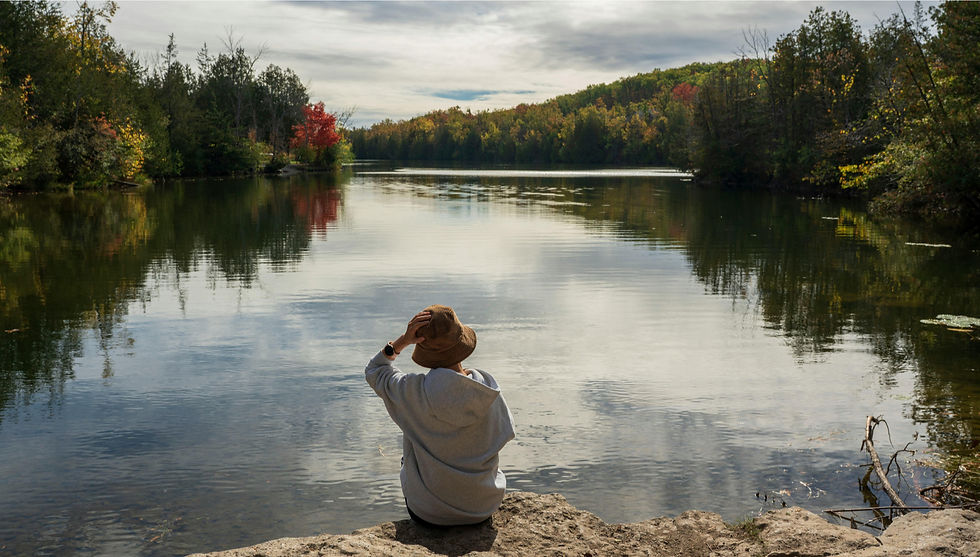
If you sat with this for a bit and gave yourself the time and space to process this information, maybe the realization came that if you allowed yourself to be programmed and to become completely identified with the stories you were told and learned to believe, then you have the power within you to undo this programming, to let go of your attachment to your stories, identities, and beliefs and to allow what is True for you to surface.
Another list might help this truth feel more grounded and hopefully serve as a reminder that what we allow, we cultivate, and what we cultivate becomes our reality.
These are some of the things we allow that can take us in the opposite direction, away from our Truth and wholeness:
We allow fear to run our lives and to influence our decisions.
We allow ourselves to become attached to our identities and stories and all they represent—even when they no longer serve us.
We allow the agendas of others to dictate our lives.
We allow our impulses to make our decisions.
We allow all sorts of unnecessary things and activities into our lives to the point of overwhelm and burnout.
We allow greed to steal our sense of contentment and to define our purpose.
We allow guilt to take us into self-destructive behaviors.
We allow resentment and anger to close our heart and hurt or end meaningful relationships.
We allow our arrogance to blind us or make us deaf.
We allow our ego’s need for validation and approval to take away our authenticity and stifle our creativity.
We allow our need for things to be a certain way to surpass our need for peace.
We allow our attachments to stiffen our hearts with fear and our aversions to close its doors to wonder and awe.
We allow our love and greed for more to clutter our lives and rob us of our time, energy, and attention.
We allow our innocence to be tampered with by lies.
We allow our inherent power and greatness to be hidden and locked away.
We allow ourselves to feel separate from one another and from all of creation.
We allow our past perceived failures to define us and derail us.
We allow our small selves to take our lives into multiple directions at the same time, creating unnecessary chaos and endlessly complicating our existence.
We allow vanity to define our worth.
We allow ourselves to carry burdens that are not necessary and often not even ours to begin with.
We allow ourselves to live joyless, meaningless, stressful lives in order to fit in or please others.
We allow ourselves to cultivate all sorts of harmful habits.
We allow our inner True Voice to be overpowered by the voice of our ego.
We allow ourselves to become blind to the beauty and simplicity of this world, and we allow ourselves to forget that we are part of this eternal beauty and simplicity.

And many more, as you will surely discover once you take responsibility and ownership for what you allow into your life.
For you see, we are always allowing, and the beauty of this is that we get to choose what we allow. The beginning of true peace and freedom is grounded in the path of conscious Inner Allowing, in the recognition that what we allow becomes true for us, and perhaps more importantly, the recognition that we can surrender and allow Life and God’s infinite intelligence to move through us and guide us Home to the wholeness and freedom of our Being.

What does an Inner Allowing Facilitator, such as myself, do?
From my perspective and experience, an Inner Allowing Facilitator holds a safe space for a person, or group of people, where they can allow what is present and ready to be released, revealed, or processed to do so.
One of the most important roles a facilitator plays is that of helping the person or group access their true and higher Self—their inner Teacher—so that this teacher can guide the person through the healing and allowing process. A facilitator prompts reflection by asking open-ended questions aimed at the heart, which may help the person gain a different and broader perspective that fosters healing, releasing, and forgiving. Through this process, the person can access high levels of intuition and higher guidance that can help them make heart-centered decisions and live a more attuned, aligned, peaceful, joyful, meaningful, healthful, and free life, as well as tap into their inherent creativity, authenticity, and inner wisdom.
Here you can find out more about the Inner Allowing Sessions I have the honor to facilitate.

"Nothing that you have refused to accept can be brought into awareness. It is not dangerous in itself, but you have made it seem dangerous to you."
A Course In Miracles


Comments